Science Article 5
GLP-1 Medications, Weight Loss & Muscle Mass: What the Science Shows for Metabolic Health
Understanding body composition during GLP-1 weight loss — and evidence-based strategies to preserve metabolically active lean tissue
Written by BeyondGLP Editorial Team · Medically reviewed by Dr. Gabriel, MD
Key Takeaways
- Weight loss from any cause — including GLP-1 medications, dieting, or surgery — can include lean mass loss without proper safeguards
- GLP-1 medications are not uniquely harmful to muscle, but rapid weight loss increases the importance of proactive preservation strategies
- Protein intake (1.2-1.6g/kg) and resistance training are the primary evidence-based factors for muscle preservation during weight management
- Muscle mass is critical for metabolic rate, glucose disposal, insulin sensitivity, and long-term sustainable weight maintenance
From Dr. Gabriel
Muscle loss during weight loss is not unique to GLP-1 medications — it's a well-documented phenomenon in any significant caloric deficit. The difference is that GLP-1 medications can create rapid, deep deficits that make muscle preservation even more important to address proactively. Adequate protein intake and resistance training are essential natural strategies for maintaining the lean mass that drives metabolism and supports sustainable weight management.
One of the most common concerns about GLP-1 medications is whether they cause muscle loss. Clinical trials show that weight loss during GLP-1 therapy can include loss of lean mass — but this is not unique to GLP-1 medications.
Any significant caloric deficit, whether from medication, dieting, or bariatric surgery, can result in lean tissue loss if protein intake and resistance training are insufficient.
This article explains what clinical trials show about muscle loss during GLP-1 therapy, why muscle preservation matters for long-term outcomes, and how to protect muscle mass during treatment.
What Clinical Trials Show
Large-scale trials of semaglutide and tirzepatide consistently show that a portion of total weight loss comes from lean tissue. In the STEP trials (semaglutide), approximately 25–40% of weight loss came from lean mass. Similar patterns are seen in other GLP-1 trials.
This is not unique to GLP-1 medications:
- Calorie restriction alone leads to 20–30% lean mass loss in most weight loss studies
- Bariatric surgery results in similar lean mass loss proportions
- Rapid weight loss increases the proportion of lean tissue lost
The issue is not that GLP-1 medications are uniquely harmful to muscle. The issue is that rapid, significant weight loss — from any cause — requires active effort to preserve muscle mass.
Why Muscle Matters for Metabolism
Muscle mass is not just about strength or appearance. It plays a central role in metabolic health and long-term weight regulation.
Muscle tissue:
- Supports glucose disposal — muscle is the primary site of insulin-mediated glucose uptake
- Maintains resting metabolic rate — muscle burns more calories at rest than fat tissue
- Improves insulin sensitivity — more muscle means better metabolic flexibility
- Reduces weight regain risk — higher metabolic rate makes maintenance easier
Losing muscle during weight loss reduces metabolic rate, impairs glucose disposal, and increases the likelihood of weight regain after treatment ends.
Protecting Muscle During GLP-1 Therapy
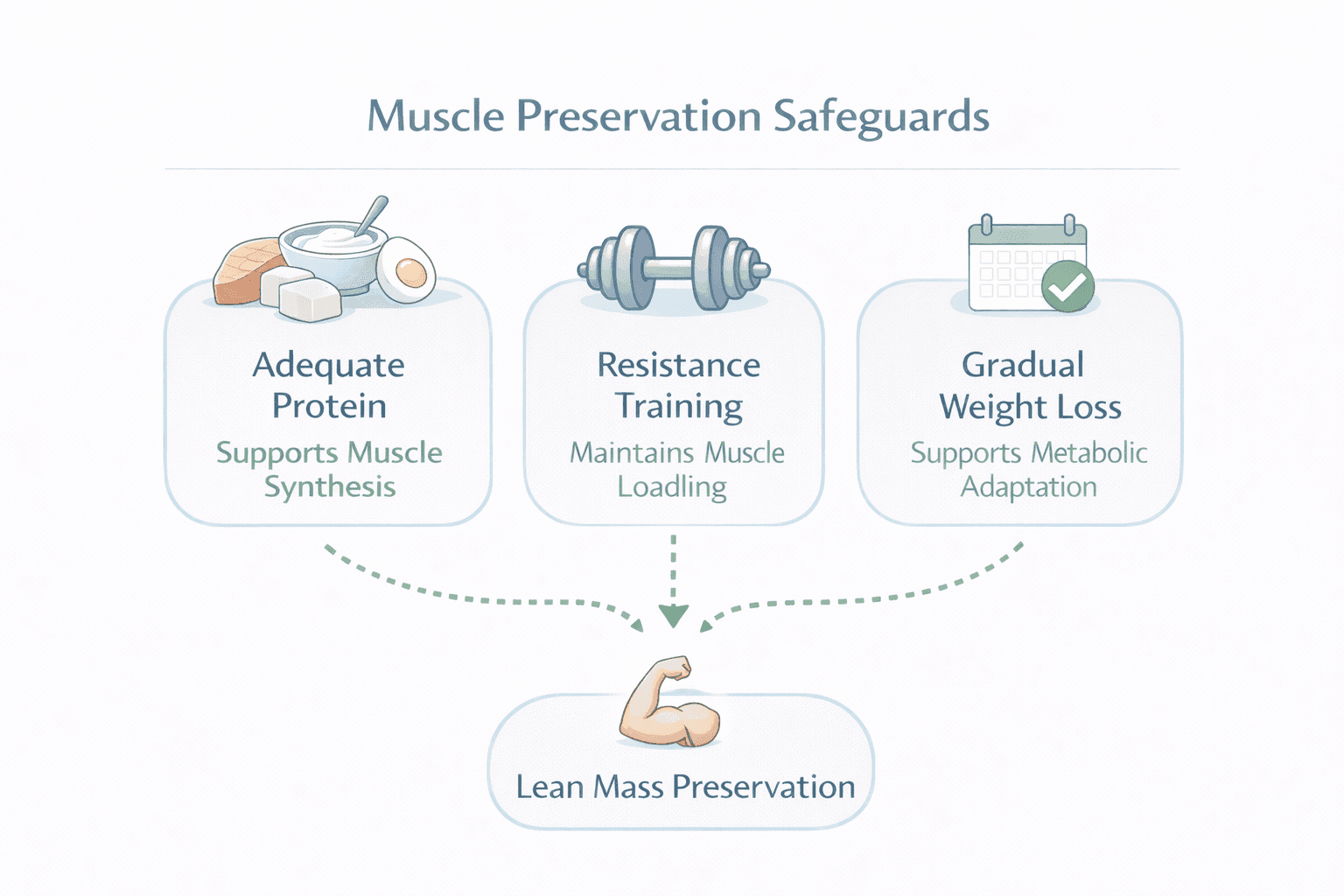
The primary strategies for muscle preservation during weight loss are well-established:
- Resistance training 2–3 times per week, focused on progressive overload
- Protein intake of 1.2–1.6 g/kg body weight to support muscle protein synthesis
- Avoid extreme calorie restriction even when appetite is suppressed
- Prioritize protein at each meal to distribute intake across the day
These strategies do not replace the medication’s appetite control, but they prevent the metabolic consequences of rapid lean mass loss.
Cardio alone is not enough. Resistance training provides a direct stimulus for muscle retention that cardiovascular exercise does not.
The Long-Term Stakes
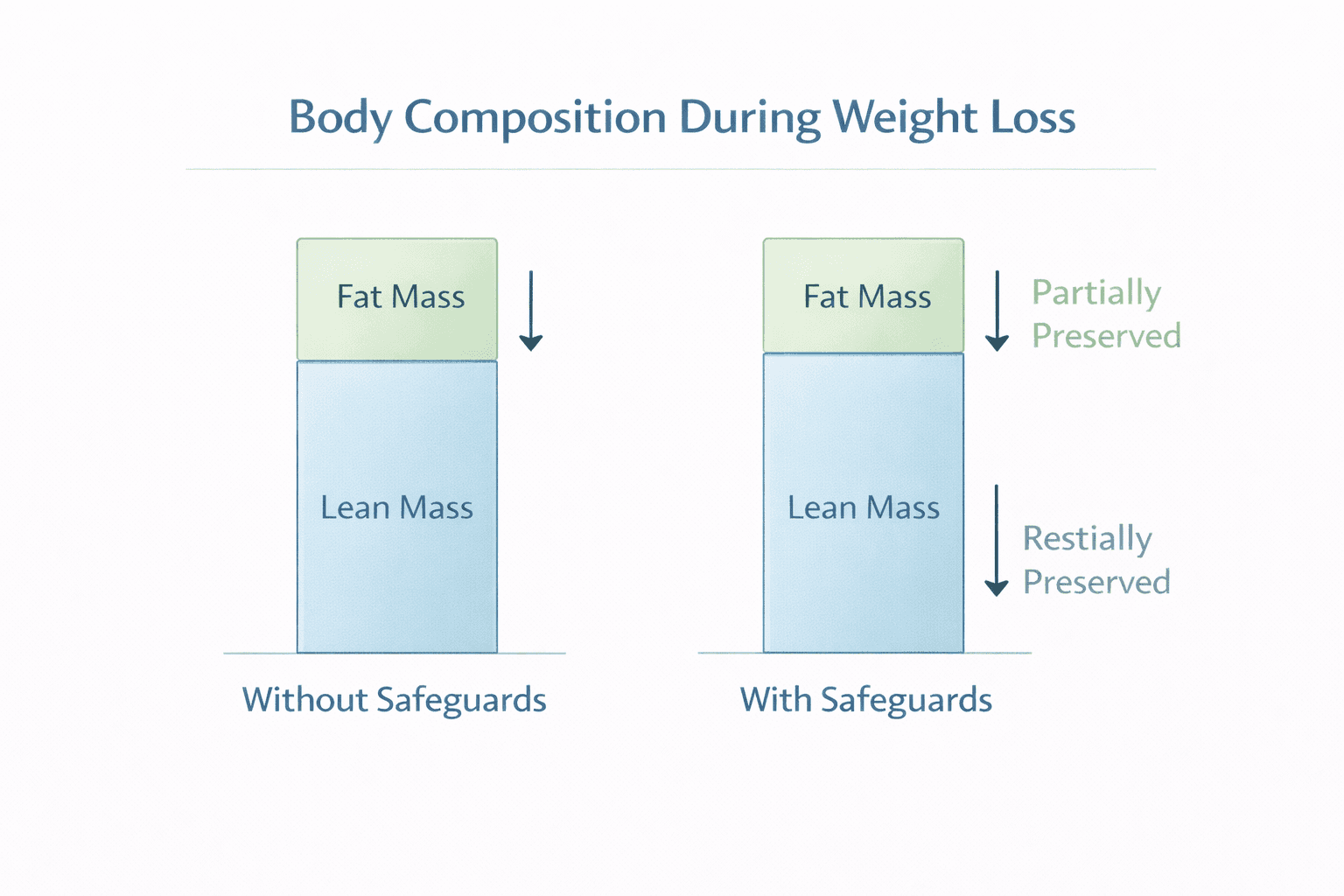
Muscle loss during GLP-1 therapy is not just a short-term concern. It directly affects what happens after the medication stops.
People who lose significant lean mass during treatment often experience:
- Lower resting metabolic rate, making weight maintenance harder
- Reduced insulin sensitivity, increasing hunger and cravings
- Higher likelihood of weight regain when appetite suppression ends
Preserving muscle during GLP-1 therapy is one of the most important factors for long-term success.
Common Questions
Does GLP-1 medication directly cause muscle loss during weight loss?
GLP-1 medications do not directly cause muscle loss. Weight loss from any cause can include 25-40% lean mass loss if protein intake and resistance training are insufficient. Proactive muscle preservation strategies — including adequate protein and strength training — are essential components of any GLP-1 weight management plan.
How much protein do I need during GLP-1 weight loss to preserve muscle?
Most research supports 1.2–1.6 g/kg body weight for muscle preservation during weight loss, distributed across meals. This is especially important during GLP-1 therapy when reduced appetite can lead to inadequate protein intake. Higher intakes may benefit individuals doing intensive resistance training.
Is cardio enough to prevent muscle loss during GLP-1 weight management?
No. Cardiovascular training supports metabolic health and cardiovascular fitness but does not provide the mechanical stimulus needed for muscle retention. Resistance training 2-3 times per week is essential as a metabolism booster and for preserving the lean mass that drives long-term weight management success.
Why does body composition matter more than the scale for metabolic health?
Body composition — the ratio of muscle to fat — determines your metabolic rate, insulin sensitivity, and long-term weight management capacity. The scale alone can mask unhealthy muscle loss that undermines metabolic health. Focusing on preserving lean mass during GLP-1 weight loss produces more sustainable outcomes than chasing a number.
Educational content only. Information explains physiology and is not intended as medical advice. Always consult a qualified healthcare provider regarding medical decisions.