Science Article 4
Can You Support GLP-1 Naturally While on Medication? System-Level Support for Enhanced Weight Loss
Why natural metabolic support strategies alongside GLP-1 medication create the foundation for sustainable weight management
Written by BeyondGLP Editorial Team · Medically reviewed by Dr. Gabriel, MD
Key Takeaways
- Natural GLP-1 support strategies complement medications — they build the metabolic system that determines long-term weight management success
- Muscle preservation during GLP-1 medication use is critical for maintaining metabolic rate and insulin sensitivity
- Nutrition quality and natural appetite suppressant strategies matter even when pharmacologic appetite suppression is active
- Building sustainable habits during medication creates metabolic durability for the transition off treatment
From Dr. Gabriel
Many patients ask whether lifestyle changes matter while taking GLP-1 medication. The answer is yes — not because they replace what the medication does, but because they build the metabolic foundation that determines what happens when the medication eventually stops. Natural GLP-1 support strategies, including adequate protein, resistance training, and metabolism booster approaches, are essential complements to pharmacologic treatment.
One of the most common questions people have when starting GLP-1 therapy is: does it matter what I eat or how I train if the medication is already controlling my appetite?
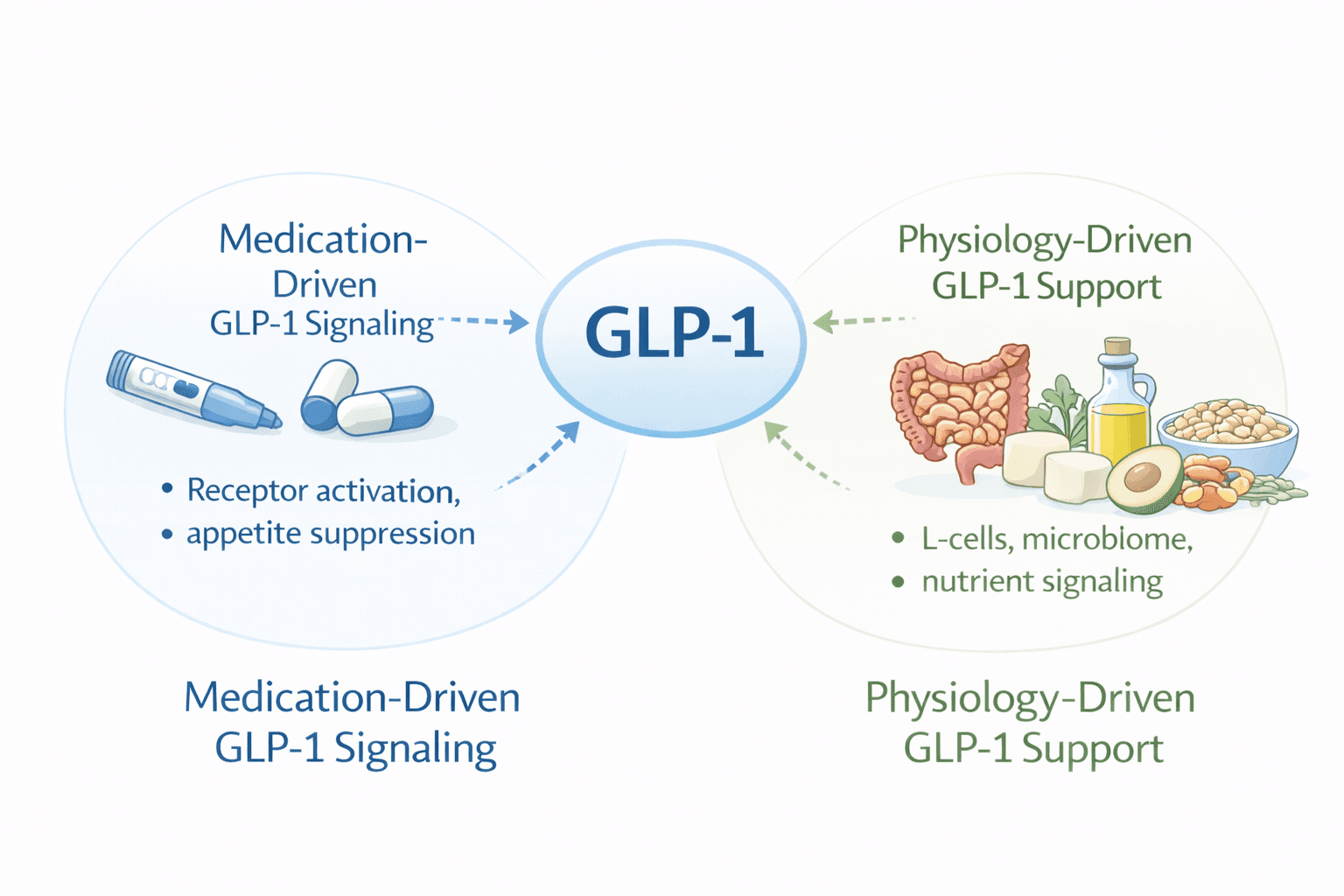
The short answer is yes. Natural GLP-1 support does not replace what the medication does, but it builds the metabolic foundation that determines what happens when the medication eventually stops.
This article explains why lifestyle changes still matter during GLP-1 therapy, how to protect muscle mass during treatment, and why the habits built during medication often determine long-term outcomes.
Why Lifestyle Still Matters on Medication
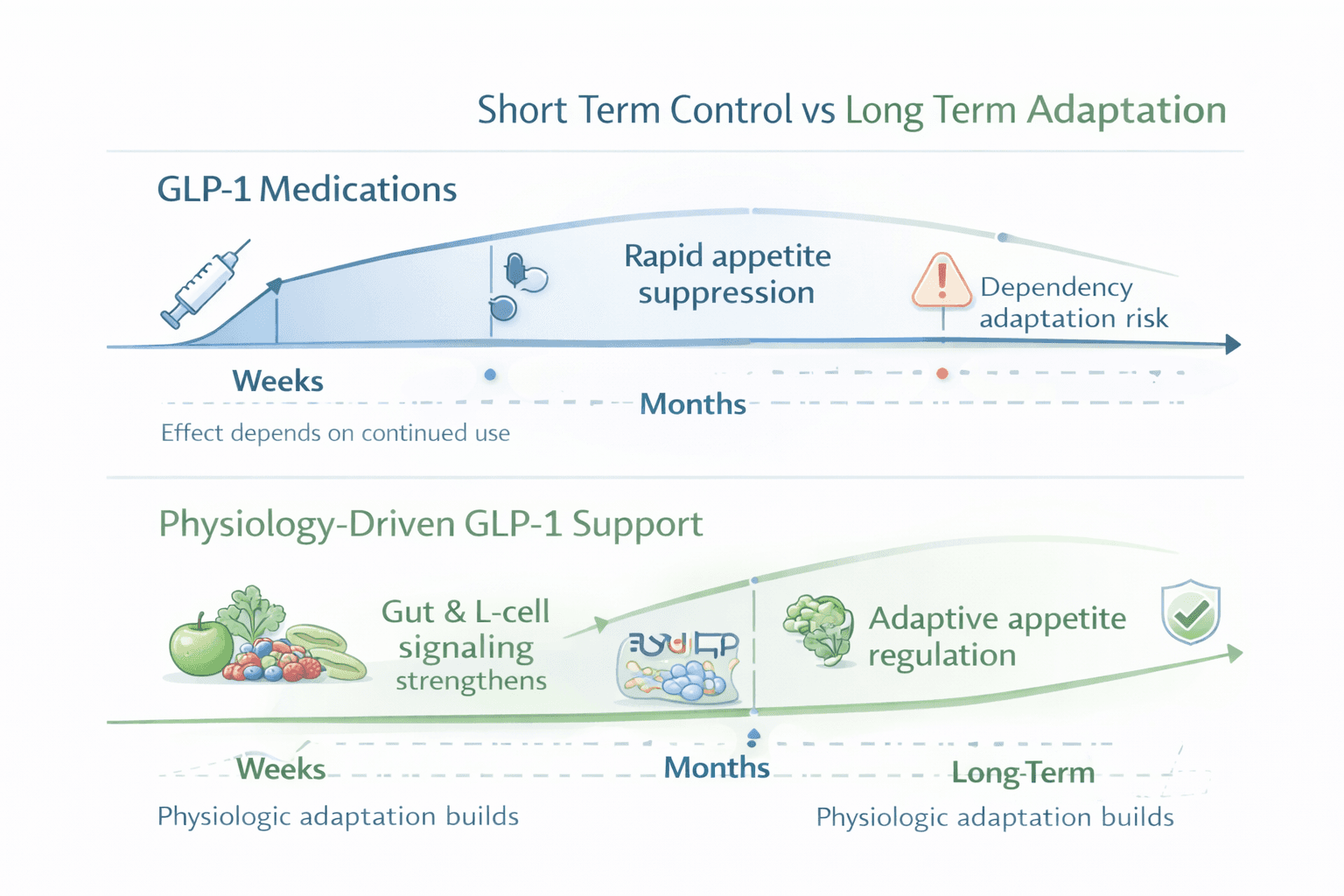
GLP-1 medications provide strong appetite suppression and make it easier to reduce calorie intake. They do not, however, address the metabolic systems that shape long-term weight maintenance.
Medication does not:
- Build or preserve muscle mass
- Improve insulin sensitivity beyond weight loss
- Teach sustainable eating patterns
- Prevent nutrient deficiencies during calorie restriction
These factors determine what happens when appetite suppression ends. Muscle mass, insulin sensitivity, and meal habits create the metabolic environment that influences appetite regulation after the medication stops.
Muscle Preservation During GLP-1 Therapy
Clinical trials consistently show that a portion of weight lost during GLP-1 therapy comes from lean tissue, particularly when weight loss is rapid. This is not unique to GLP-1 medications — it occurs during any significant caloric deficit.
Muscle mass is critical for glucose disposal, metabolic rate, and long-term weight maintenance. Losing muscle during treatment increases the likelihood of weight regain after stopping.
Protecting muscle requires:
- Resistance training 2–3 times per week, focused on progressive overload
- Adequate protein intake (1.2–1.6 g/kg body weight) to support muscle protein synthesis
- Avoiding extreme calorie restriction even when appetite is low
These practices do not replace the medication’s appetite control, but they prevent the metabolic consequences of rapid lean mass loss.
Nutrition Quality vs Quantity
GLP-1 medications reduce appetite, making it easier to eat less. This does not mean that what you eat becomes irrelevant. In fact, when total food intake is low, nutrient density becomes more important.
Common patterns during GLP-1 therapy:
- Reduced hunger leading to skipped meals or very low protein intake
- Over-reliance on simple carbohydrates due to nausea or texture aversions
- Insufficient energy intake leading to fatigue or low training capacity
Protein should remain a priority even when appetite is suppressed. Adequate fiber, micronutrients, and energy intake support recovery, performance, and long-term metabolic health.
Building the Foundation for After
The habits built during GLP-1 therapy often determine what happens after the medication stops. If someone uses the medication as an opportunity to build muscle, improve insulin sensitivity, and establish consistent meal patterns, they are far more likely to maintain results.
If someone relies entirely on pharmacologic appetite suppression without addressing metabolic context, appetite regulation often becomes difficult again once the medication ends.
GLP-1 medications provide a tool for appetite control. Lifestyle builds the system that determines durability.
Common Questions
Does nutrition matter for weight loss if GLP-1 medication suppresses my appetite?
Yes, absolutely. Protein intake, nutrient density, and energy sufficiency become even more critical when total food intake is reduced by GLP-1 medication. Prioritizing natural appetite suppressant foods like high-protein meals and fiber supports muscle preservation and metabolic health during weight loss.
Should I exercise while on GLP-1 medication for better weight management?
Yes. Resistance training 2-3 times per week is critical for preserving muscle mass during GLP-1 weight loss, which directly impacts your metabolic rate and long-term weight management. Cardiovascular training supports metabolic health but does not replace resistance training for muscle preservation.
Can natural GLP-1 support strategies reduce medication side effects?
In many cases, yes. Adequate hydration, fiber intake, protein-forward meals, and gradual dose escalation can reduce nausea and digestive side effects. These natural metabolic support strategies don't eliminate side effects but can significantly improve tolerance and overall outcomes.
What metabolism booster supplements work alongside GLP-1 medications?
The most evidence-based supplements alongside GLP-1 medications include high-quality protein for muscle preservation, fiber for gut health, and targeted micronutrients. Always consult your healthcare provider before combining supplements with GLP-1 medication. BeyondGLP provides doctor-led guidance on safe supplementation strategies.
Educational content only. Information explains physiology and is not intended as medical advice. Always consult a qualified healthcare provider regarding medical decisions.