Explainer
Why Weight Loss Fails: Understanding Metabolic Adaptation & Natural GLP-1 Alternatives
For many, the journey to sustainable weight loss is derailed not by a lack of effort, but by the body's intricate adaptive mechanisms.
Written by BeyondGLP Editorial Team · Medically reviewed by Dr. Gabriel, MD
If you've diligently pursued various weight loss strategies — eating less, moving more, and committing to healthy habits — only to face frustrating plateaus or weight regain, you are not alone. This common struggle isn't a personal failing; it's a profound physiological response.
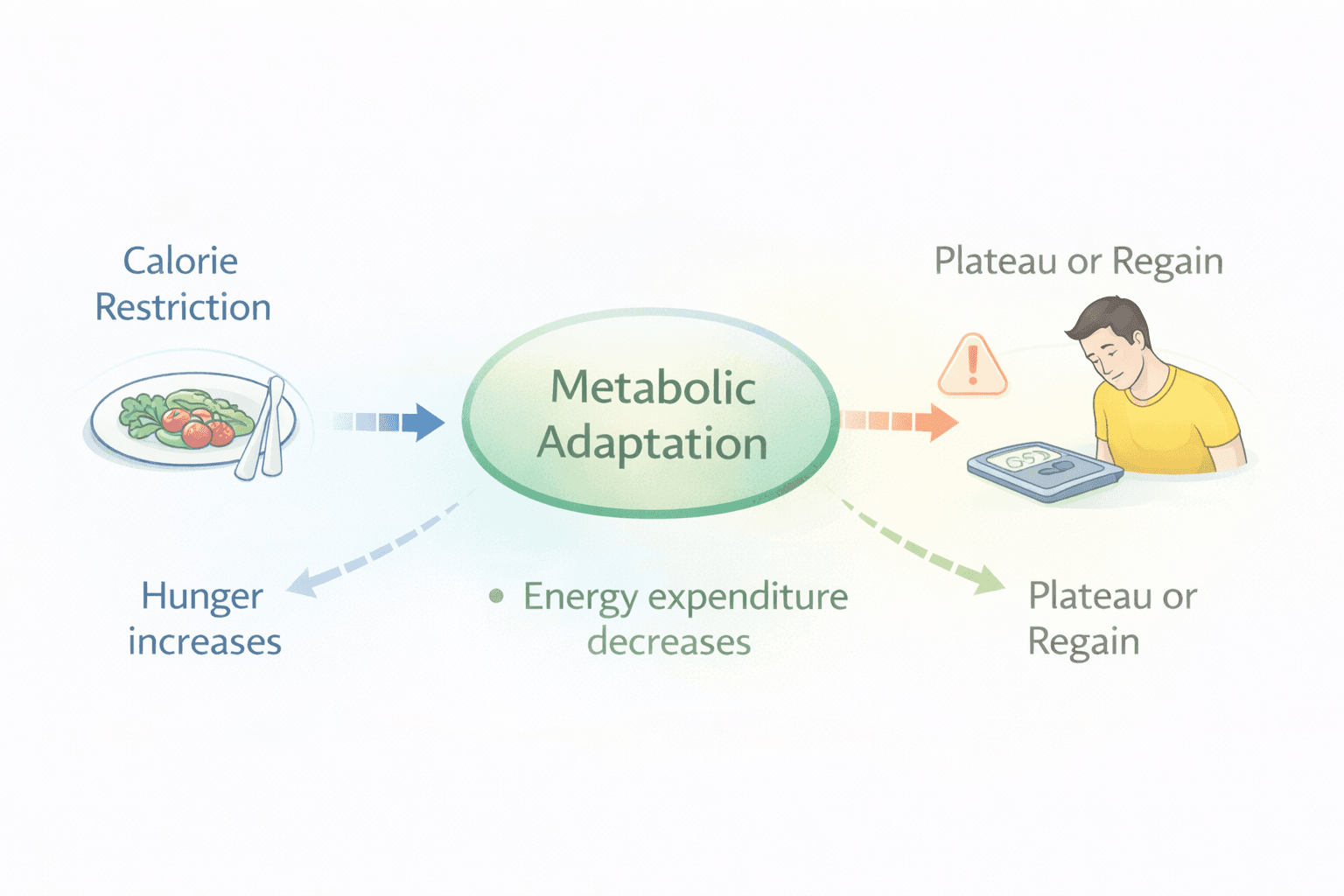
Our metabolism is fundamentally designed to safeguard energy balance. When faced with calorie restriction, chronic stress, or repeated dieting cycles, the body initiates a powerful counter-response. This metabolic adaptation can manifest as increased hunger, reduced energy expenditure, and hormonal shifts that make sustained fat loss progressively harder, often pushing back far more intensely than willpower alone can overcome.
At BeyondGLP, we understand that true weight management requires addressing this complex interplay of signals.
The Flawed Approach: Why Conventional Weight Loss Strategies Often Fail
Most conventional weight loss strategies predominantly focus on behavioral changes — eat less, move more. However, this approach often overlooks the profound physiological responses that occur when the body perceives a threat to its energy reserves.
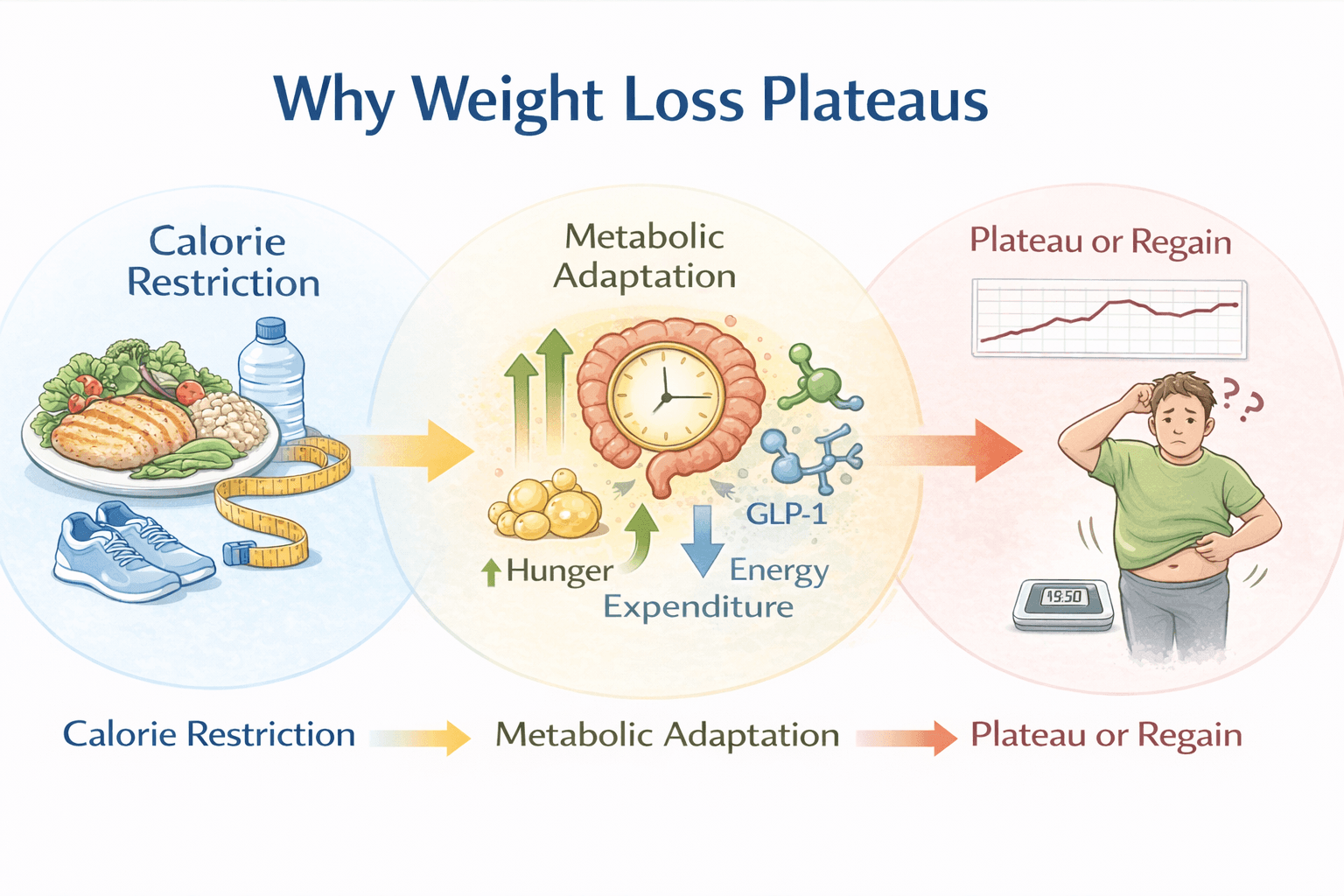
The body responds to restriction by fundamentally altering hunger signals, optimizing energy use, and shifting hormone activity. This leads to increased appetite as hormones like ghrelin surge, decreased energy expenditure through adaptive thermogenesis, and hormonal imbalance affecting insulin and GLP-1 that further complicates fat loss.
This creates a challenging cycle where initial efforts yield diminishing returns, leading to frustration and often, weight regain. Understanding this distinction between short-term appetite suppression and long-term metabolic adaptation is crucial for sustainable results.
Beyond Calories: Weight as an Outcome of Metabolic Signaling
Weight itself is merely an outcome, a downstream indicator of a much larger and more complex metabolic signaling system. This intricate network involves constant communication between critical organs: the gut, brain, muscle, and pancreas. Hormones such as Glucagon-Like Peptide-1 (GLP-1), insulin, leptin, and ghrelin play pivotal roles in regulating appetite, satiety, energy storage, and utilization.
When these delicate signals are disrupted — whether by diet, stress, or environmental factors — the body's default response is to prioritize energy conservation and storage, even when calorie intake is reduced. This physiological imperative often overrides conscious efforts to lose weight.
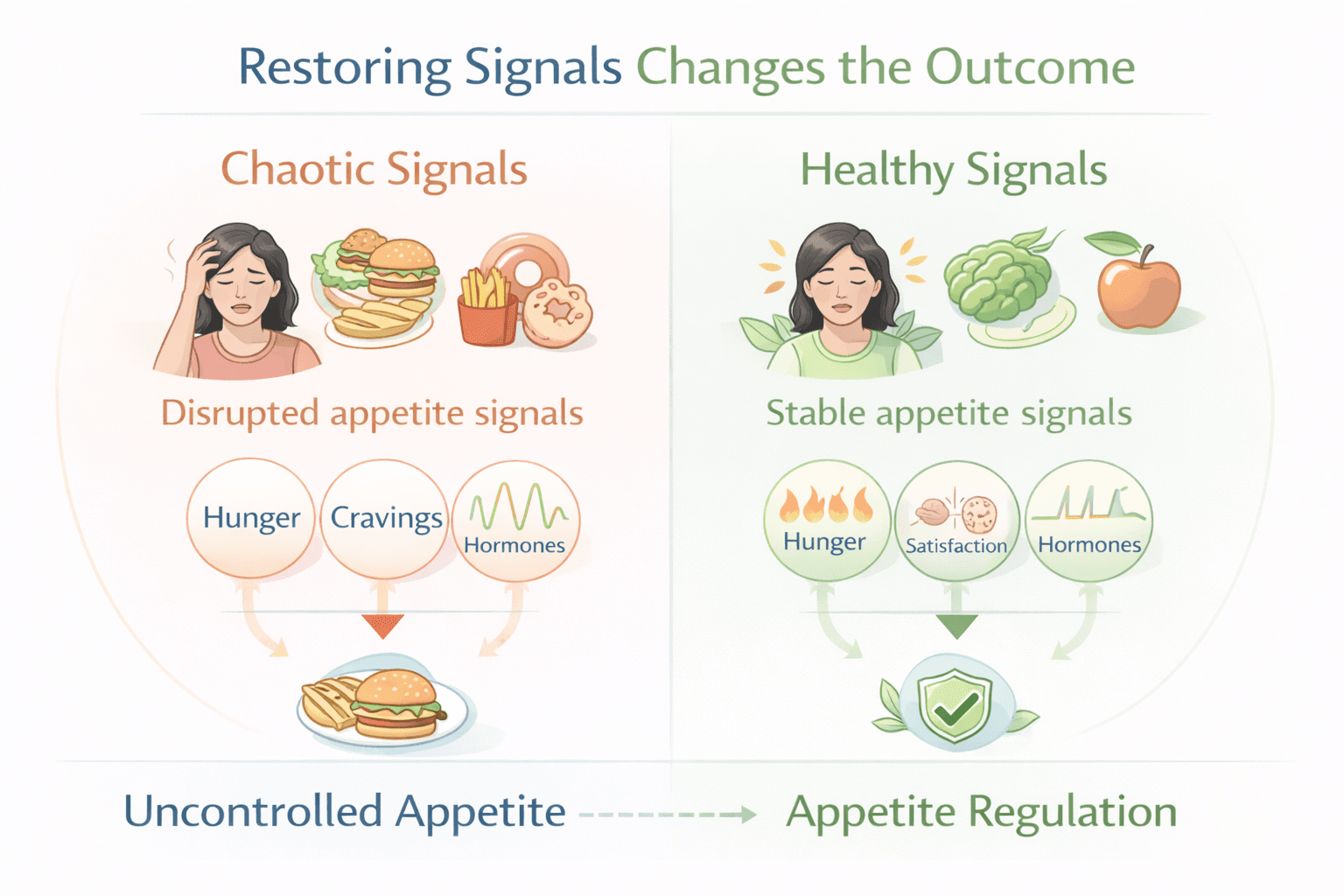
Therefore, achieving long-term, sustainable weight loss and metabolic health hinges not on fighting these signals with willpower, but on understanding and restoring their balance. When metabolic signaling is stabilized and optimized, the body can cooperate with weight management, rather than resisting it.
What is GLP-1 and Why is it Important for Weight Loss?
GLP-1 (Glucagon-Like Peptide-1) is a naturally occurring hormone produced in the gut that plays a crucial role in metabolic regulation. It helps regulate blood sugar by stimulating insulin release, slows gastric emptying, and significantly impacts satiety and appetite suppression. In essence, higher levels of GLP-1 can help you feel fuller for longer, reduce cravings, and support healthy blood sugar levels, all of which are vital for effective weight management.
Key Benefits of GLP-1:
- Appetite Suppression: Reduces hunger signals from the brain.
- Increased Satiety: Helps you feel full and satisfied after meals.
- Blood Sugar Regulation: Slows glucose absorption and stimulates insulin secretion.
- Reduced Cravings: Particularly for sugary foods.
- Supports Fat Loss: By improving metabolic efficiency and reducing calorie intake.
Exploring Natural GLP-1 Alternatives and Metabolism Booster Supplements
While pharmaceutical GLP-1 agonists have gained significant attention, many individuals are seeking natural ways to support their GLP-1 levels and metabolic health. BeyondGLP focuses on science-backed, natural GLP-1 alternatives and metabolism booster supplements that work synergistically with your body's systems.
These natural weight loss supplements aim to enhance metabolic signaling, promote natural appetite suppression, and provide a holistic approach to weight management without relying solely on prescription medications. Ingredients like specific fibers, plant extracts, and probiotics can influence gut hormones, including GLP-1, and support a healthy metabolic rate.
For women especially, finding the best supplement for weight loss that also supports energy levels and overall well-being is crucial. Our doctor-led protocols integrate these natural solutions to help you achieve balanced metabolic function.
Beyond Willpower: Embracing a System-Based Approach for Sustainable Weight Management
Sustainable weight management and fat loss are achieved when the body's metabolic system is brought into harmony, rather than being forced into submission. This paradigm shift means moving beyond the pursuit of quick fixes or extreme calorie restriction. Instead, it involves a deep understanding of how metabolic signals — including GLP-1, insulin, leptin, and ghrelin — interact within the gut, brain, muscle, and pancreas.
At BeyondGLP, our doctor-led, science-based approach focuses on restoring this delicate balance. By addressing the root causes of metabolic dysfunction, we empower your body to cooperate with weight loss, leading to more effective and lasting results than relying on willpower or behavioral changes alone.
See how this fits into the metabolic systemEducational content only. Information explains physiology and is not intended as medical advice. Always consult a qualified healthcare provider regarding medical decisions.