Science Article 7
What Happens When You Stop GLP-1 Medication? Appetite, Weight Regain & Metabolic Stability
Understanding the biological transition after GLP-1 therapy — and how natural metabolic support determines your long-term weight management outcomes
Written by BeyondGLP Editorial Team · Medically reviewed by Dr. Gabriel, MD
Key Takeaways
- When GLP-1 medications stop, pharmacologic receptor activation ends — appetite regulation returns to your body's natural systems
- Appetite typically returns toward pre-medication patterns, but the strength of natural appetite regulation depends on metabolic support built during treatment
- Weight regain reflects loss of pharmacologic signaling, not personal failure — it is a predictable biological response that can be managed
- Long-term weight management outcomes depend on muscle mass, insulin sensitivity, natural appetite regulation habits, and metabolic health foundations built during treatment
From Dr. Gabriel
The most common question I hear from patients approaching the end of GLP-1 therapy is: will the weight come back? The honest answer is that appetite regulation often shifts back toward baseline — but what baseline looks like depends entirely on what was built during treatment. Natural GLP-1 support strategies, muscle preservation, and metabolic health foundations are what determine whether weight management continues successfully.
One of the most common concerns about GLP-1 medications is: what happens when I stop? Will appetite return? Will the weight come back?
The short answer is that GLP-1 medications do not permanently change how the body produces or regulates appetite. When the medication stops, pharmacologic signaling ends and appetite typically returns toward pre-medication patterns.
This article explains what happens biologically when GLP-1 therapy ends, why appetite often returns, and what determines whether weight regain occurs.
What Happens Biologically
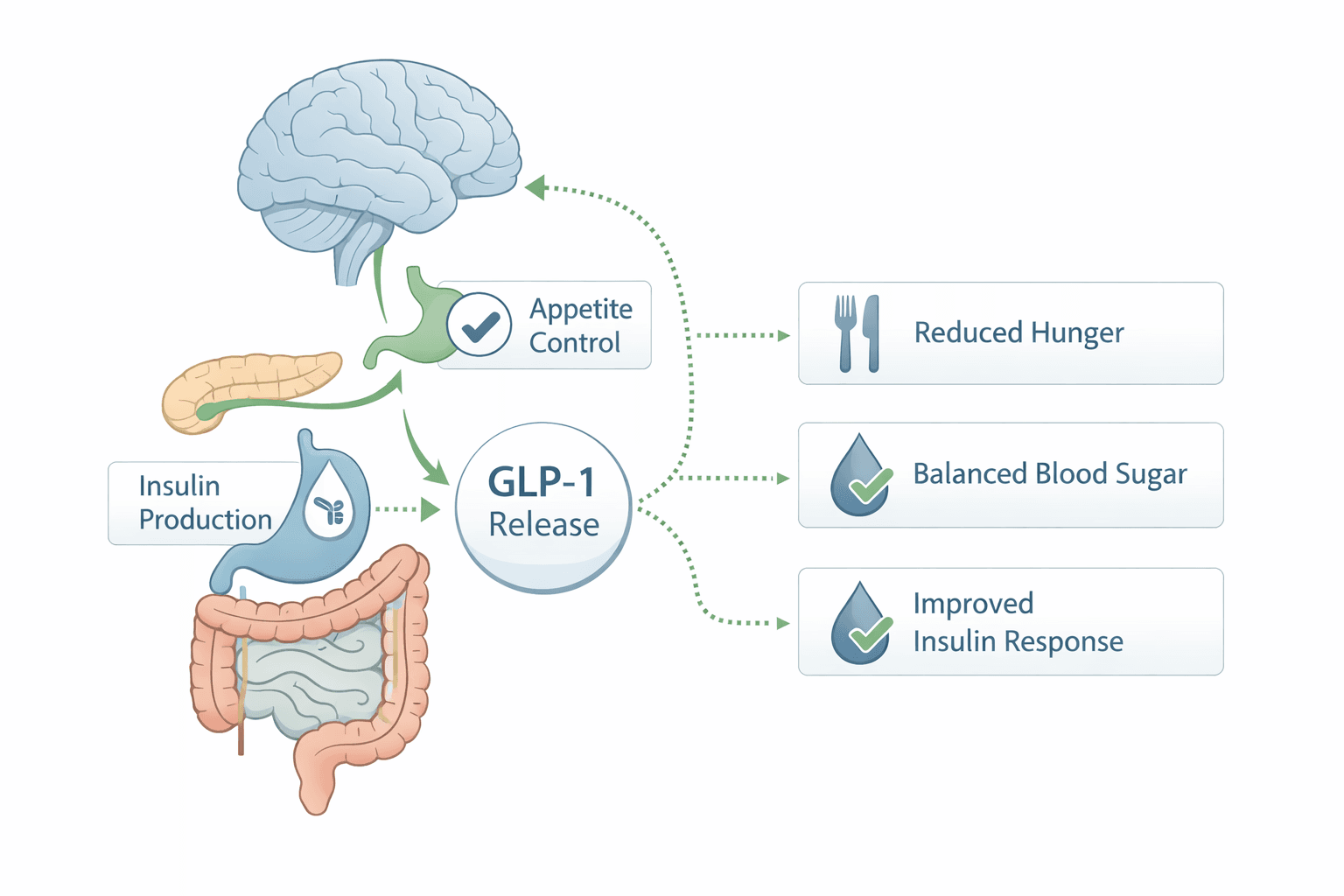
GLP-1 receptor agonists work by providing sustained pharmacologic activation of GLP-1 receptors. This creates strong appetite suppression and weight loss while the medication is present in the bloodstream.
When the medication is stopped:
- Pharmacologic receptor activation ends
- Endogenous (natural) GLP-1 signaling returns to its prior pattern
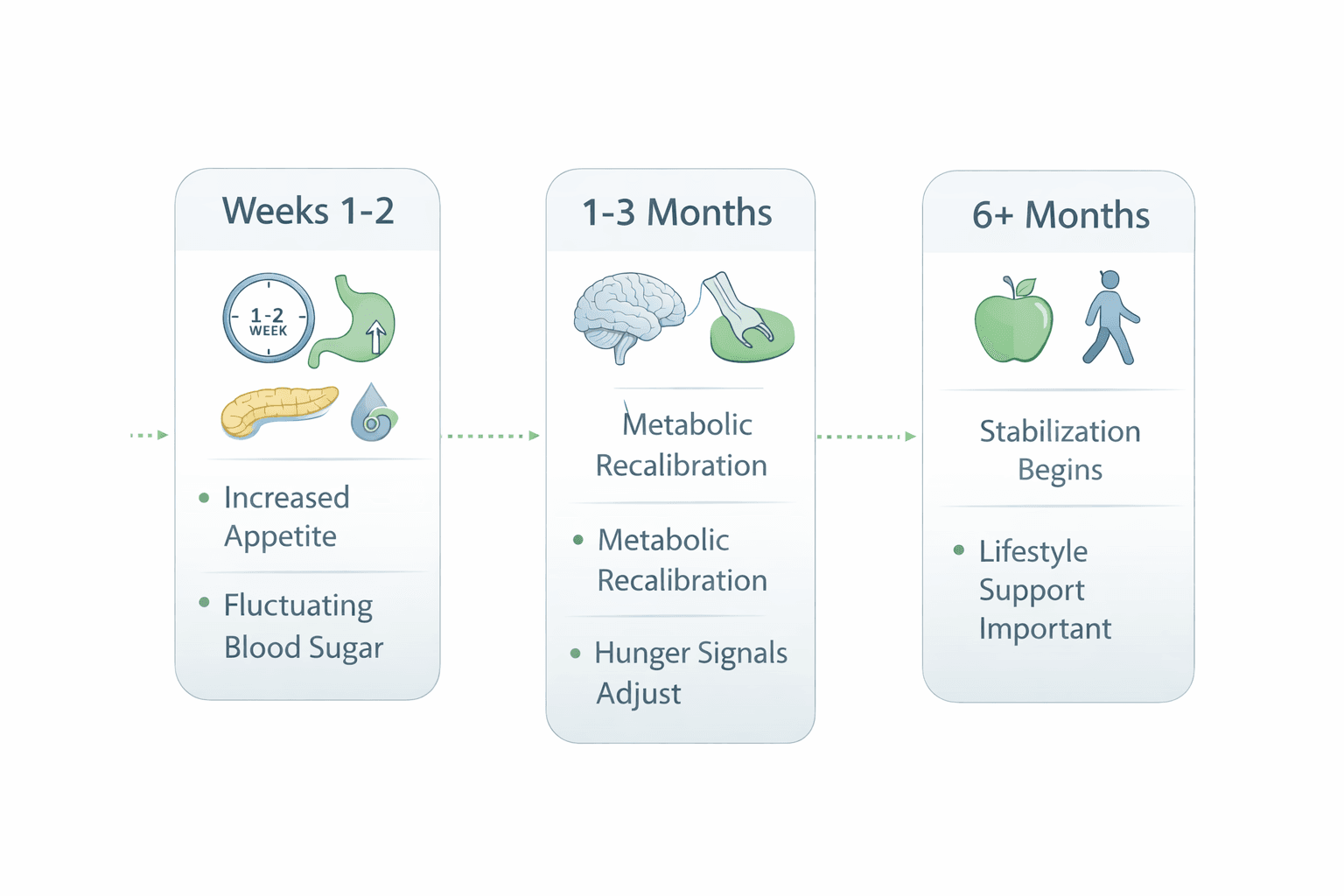
- Appetite gradually returns over weeks to months
- Gastric emptying normalizes
This is not dependency or withdrawal. It is simply the end of pharmacologic signaling. The body returns to regulating appetite through its endogenous systems.
Why Appetite Comes Back
GLP-1 medications do not teach the body to produce more GLP-1. They do not reset endogenous hormone production. They provide an external, pharmacologic signal that mimics — but does not replace — natural GLP-1 function.
When that external signal is removed, appetite regulation returns to the pattern that existed before treatment. For many people, this means:
- Hunger increases
- Satiety feels less reliable
- Food feels more appealing
- Portion control becomes harder
This is not failure. It is the expected biological response to the loss of pharmacologic appetite suppression.
What Determines Outcomes After Stopping
Weight regain after GLP-1 therapy is common, but it is not inevitable. The primary determinants of long-term outcomes are:
- Muscle mass — higher muscle mass supports glucose disposal, metabolic rate, and insulin sensitivity
- Insulin sensitivity — better metabolic flexibility reduces hunger and improves satiety signaling
- Meal consistency — stable eating patterns support predictable blood sugar and appetite regulation
- Sleep and stress — cortisol, ghrelin, and leptin signaling shape hunger and satiety
People who preserve muscle, improve insulin sensitivity, and establish consistent habits during GLP-1 therapy often maintain results better than those who rely entirely on pharmacologic appetite suppression.
Planning the Transition
Stopping GLP-1 therapy is not a one-time event. It is a transition that should be planned and monitored.
Strategies for transitioning off medication:
- Gradual dose reduction — tapering rather than abrupt discontinuation may ease appetite changes
- Maintain resistance training — muscle preservation is critical during and after treatment
- Prioritize protein intake — consistent protein supports satiety and muscle retention
- Monitor appetite patterns, not just weight — changes in hunger, satiety, and food preoccupation are early signals
The goal is not to prevent appetite from returning — that is expected. The goal is to build the metabolic environment that makes appetite regulation more predictable without pharmacologic support.
Common Questions
Do you gain all the weight back after stopping GLP-1 medication?
Not necessarily. Weight regain after stopping GLP-1 depends on the metabolic foundation built during treatment. People who preserve muscle mass, improve insulin sensitivity, establish natural appetite regulation habits, and maintain protein-forward nutrition often sustain their weight management results significantly better.
Does your body become dependent on GLP-1 medication?
No. GLP-1 medications do not suppress your body's natural GLP-1 production or create biological dependency. When the medication stops, endogenous appetite signaling returns to its prior pattern. Building natural GLP-1 support strategies during treatment prepares your body for this transition.
When should I stop GLP-1 medication and how do I prepare?
Stopping GLP-1 medication is a clinical decision that should be made with a healthcare provider. The transition should be planned, gradual, and accompanied by established metabolic support strategies including resistance training for muscle preservation, protein-forward nutrition for natural appetite suppression, and comprehensive metabolic health protocols.
What natural strategies help maintain weight loss after stopping GLP-1?
Key natural strategies include consistent protein intake for natural appetite suppression, resistance training to maintain metabolic rate, soluble fiber for gut health and endogenous GLP-1 support, quality sleep for appetite hormone regulation, and stress management. BeyondGLP's protocols are designed to build these natural GLP-1 alternatives into lasting habits.
Scientific References
- Wilding JPH et al. Once-weekly semaglutide in adults with overweight or obesity. New England Journal of Medicine PubMed
- Drucker DJ. Mechanisms of action and therapeutic application of glucagon-like peptide-1. Cell Metabolism PubMed
- Nauck MA, Meier JJ. Incretin hormones: Their role in health and disease. Diabetes, Obesity and Metabolism PubMed
Educational content only. Information explains physiology and is not intended as medical advice. Always consult a qualified healthcare provider regarding medical decisions.